I spent a lot of years building forms. Long sign-up pages, multi-step checkouts, and complex settings screens. Over time, I started noticing how often these forms created friction instead of helping people. Users would get stuck, make mistakes, or just give up halfway through.
One project that really made this clear was an onboarding flow for a financial app. It asked for a lot of information upfront: income, employment details, identification numbers, and more. The drop-off rate was high. People didn’t want to fill out a long form all at once. It felt like work.
We tried a different approach. Instead of one big form, we turned the process into a simple conversation. The system asked one question at a time, in a natural order, and only asked for information when it was actually needed. Users could reply in their own words instead of forcing everything into strict input fields. The drop-off rate dropped significantly, and people generally felt more comfortable moving through the process.
This shift made me think differently about interfaces. Forms force users to adapt to the system. Conversations let the system adapt to the user. When done well, they feel lighter and more natural.
Of course, not every form should be replaced with a chatbot. Simple actions like changing a password or updating an email still work fine with traditional inputs. But for anything that involves multiple steps or decisions, a conversational flow often reduces confusion and mistakes.
On the technical side, building a basic conversational interface doesn’t have to be overly complicated. You can start with a simple frontend that sends user messages to a backend, then returns responses based on rules or a small language model. Many teams begin with a structured flow first (where the system guides the conversation step by step) before adding more open-ended natural language understanding.
The real value usually comes from keeping the conversation focused. Instead of trying to handle every possible way someone might reply, it often works better to guide users through clear steps while still allowing some flexibility in how they answer. This reduces errors and keeps the experience predictable.
I’ve also seen conversational interfaces work well for tasks that used to require navigating through multiple screens. Instead of clicking through menus and filling out separate sections, users can express what they want in one go. When the system understands the intent, it can handle several actions behind the scenes without making the user do all the work manually.
That said, conversational interfaces aren’t automatically better. Poorly designed ones can feel vague or frustrating when they don’t understand what the user is trying to say. The key is to design the flow carefully, give clear feedback, and make it easy for users to correct mistakes or go back.
Overall, I’ve found that moving away from heavy forms toward more conversational experiences tends to improve completion rates and reduce user frustration. It’s not about replacing every form with a chat, but about asking whether a conversation would make the task feel easier and more natural for the person using it.
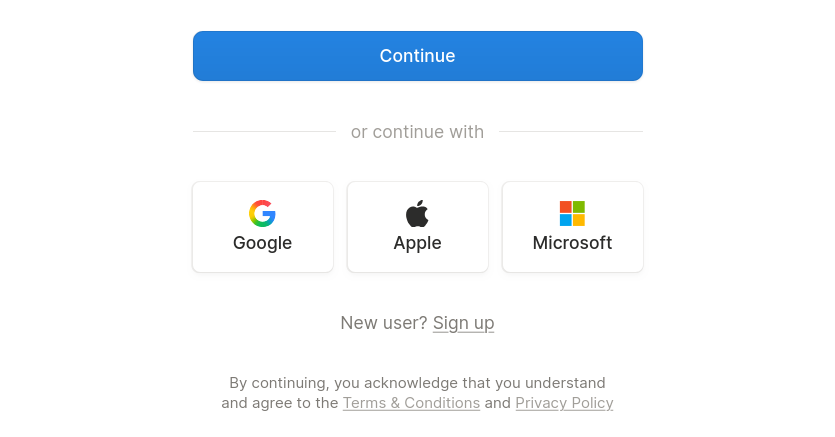
I always have a clear example of this shift and it is how sign-up and sign-in processes have changed over the years. Not long ago, almost every app asked users to fill out long forms with names, emails, passwords, and sometimes even more details. Today, many apps simply offer a Sign in with Google or Continue with Apple button. This change didn’t happen because companies suddenly became more creative :) it happened because users got tired of creating yet another account and filling out the same information repeatedly. People’s behavior and expectations pushed companies to simplify, and this kind of instant, low-friction experience has now become the standard.